

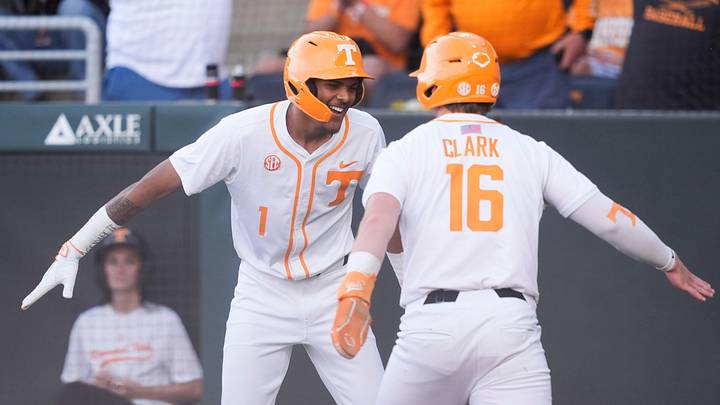
One of the toughest challenges in college baseball recruiting is finding good players who are not so highly regarded that they eventually leave for the MLB Draft out of high school and never step foot on campus. It’s a problem that all major programs deal with, and this summer Josh Elander and Tennessee could find itself in that same situation.
Outfielder and pitcher Jared Grindlinger, the brother of Tennessee catcher Trent Grindlinger, is currently committed to the Vols. However, he is projected to be a top-15 pick in the MLB Draft and could choose to forgo his Tennessee commitment in favor of beginning his professional career. The same goes for outfielder Trevor Condon from Georgia, who is also projected as a first-round pick and could ultimately decide to skip college baseball and head straight to the minor leagues.
However, a new rule that college baseball fans will love could change all of this. Jeff Passan, ESPN’s MLB insider, reported that Major League Baseball has proposed a rule that would remove high school players from the MLB Draft entirely. Under the proposal, college players would be eligible to declare for the draft after their sophomore season instead of waiting until their junior year, and the draft would shrink from 20 rounds to 12. With the CBA expiring after this season, you could see this rule happening sooner rather than later.
MLB today proposed an overhauled domestic amateur-entry system that removes high school players from the draft, makes college players eligible after sophomore year, shortens the draft from 20 to 12 rounds, and cuts bonus pool from current $358.7M to $200M, sources tell ESPN.
— Jeff Passan (@JeffPassan) June 18, 2026
The new MLB Draft proposal is a big win for college baseball fans
If this rule does pass, it would take effect after Grindlinger and Condon are drafted, so it wouldn’t directly affect them and their recruitments. However, it would be a major benefit for Tennessee and other programs moving forward. Schools could recruit elite MLB-caliber prospects without constantly worrying about them skipping college for professional baseball. It would also be great for college baseball as a whole. Similar to college football, fans would get the chance to watch the nation’s top players compete at the collegiate level instead of heading straight to the minor leagues after high school. Who doesn't like better games with better players?
And while MLB teams would obviously love to get prospects into their system as early as possible and begin developing them according to their plans, signing high school players is a very risky business and often leads to wasted money. In this scenario, college programs would take on a larger role in player development while also providing NIL compensation, ensuring top prospects are still getting paid. MLB organizations would also save a significant amount of money in signing bonuses, with estimates reaching well over $160 million per Passan. Multiply that over a few years and that's a lot of money saved.
After a couple of years of college baseball, it’s much easier to evaluate and project a player than it is when he’s 17 years old playing in a high school league he doesn’t belong in. I can see why MLB is considering this move. It saves teams money, especially with the rise of NIL in college athletics. MLB players want bigger salaries and more money, and cost-cutting measures often come with that. Offloading some of the development costs to colleges seems like the direction the league wants to go, and it would undoubtedly be a win for college baseball fans.
While this rule is still just an early proposal, the thought of more of the best baseball players in the nation playing in college is a lot of fun and would make the road to Omaha that much more exciting.
 Add us as a preferred source on Google